1953 Flood
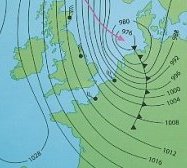
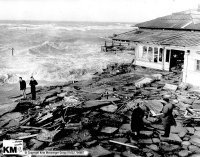
The 1953 flood has been described as the worst national peacetime disaster to hit the UK. Exceptional weather conditions, coupled with poor communications, meant that whole communities were given insufficient warning of the advancing threat.
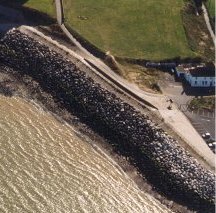
Today, nearly one million homes and businesses in England and Wales are at risk from coastal flooding. However, the risk of a disaster on the scale of the 1953 floods has been significantly reduced due to the millions of pounds spent on flood defence and warning systems.
In 1953 there was no national flood warning service or coordination. Flood defence was organised by a number of river boards. They had emergency plans but were not linked on a national basis. Emergency plans were hampered by communications failures in most locations.
The existence of proper flood warnings and communications would have greatly reduced the loss of life by allowing time for communities to be evacuated.
Following the floods, the Waverley committee was set up to report on the disaster and consider schemes to protect London. This led to the erection of the Thames Barrier, the world's largest moveable flood barrier, in 1982. It protects London and the upper reaches of the Thames from tidal flooding.
The Waverley committee also recommended that a national flood warning system be set up. This resulted in the creation of the Storm Tide Warning service, today known as the Storm Tide Forecasting Service (STFS) and operated by the Met Office, which provides 24-hour forecasts of tidal surge and wave activity.
In 1989 the National Rivers Authority was formed to oversee flood defence in England and Wales. Then, in 1996, the Environment Agency was created with overall responsibility for flood defence and flood warning.
Updated: Sunday, October 30, 2016 14:26